.png)


How the UK's Most Forward-Thinking Hospitality Operators Are Using Guest Feedback Differently
%2520(1).png)
Feedback arrives daily across Google, Booking.com, TripAdvisor, Expedia, and a handful of other platforms. Someone on the team responds. Someone pulls a monthly report. The score moves up or down and the cycle repeats. For most operators, that is where the process ends. And for most operators, that is the problem.
Reputation matters commercially. A strong score determines whether a guest shortlists your property or scrolls past it. But reputation does not exist independently of the feedback that built it. Every score is the aggregate of what guests have written. Every rating is the result of an experience someone took the time to describe. The reviews are not just the output of a stay. They are a detailed, honest, largely unfiltered record of what is actually happening inside your properties.
Most operators manage the output. The best ones interrogate the input.
What drives that distinction is not technology. It is obsession. The operations leaders pulling ahead share one characteristic above all others: they are deeply invested in the guest experience. Not abstractly, but practically. They want to know specifically what is getting in the way of it, and they want their teams to have every possible advantage when a guest is standing in front of them.
Over the past few months, we spoke with UK operations leaders running hospitality groups across different market segments, from luxury and mid-market hotels to international hostel groups. What we found was a shared conviction: the score is not the signal. The feedback behind it is. And using it well frees teams to do what they came into hospitality to do.
{{blog-cta-book-demo="/features/product-updates"}}
From task to intelligence
Most hospitality groups have a review management process. Someone checks the platforms, someone responds, someone pulls the monthly report. It is a necessary function. But it is not the same thing as using feedback.
Online reputation, maintaining scores on Booking.com, TripAdvisor, and Google, is a commercial requirement. But the score is the output. The feedback that generated it is the input. And most operators are managing the output without ever interrogating the input. The question that separates the best-run groups from the rest is not how do we improve our score. It is what is our score actually telling us, and what are we going to do about it.
Marco Griffo, Group Operations Manager at Clink Hostels, describes an operational rhythm built entirely around that question. Clink operates across London, Amsterdam, and Dublin, a high-volume, multi-property environment where feedback runs into the thousands each month. For Griffo's team, responding to reviews is the starting point, not the end point.
That cadence, systematic, ongoing, and tied directly to operational improvement, is what separates a feedback intelligence practice from a review management process. The reviews are not a task to be cleared. They are a data set to be used. Each week the team identifies patterns. Each month they assess whether the actions they put in place are having an effect. The feedback loop closes on itself, and the properties keep getting better.
Sam Shepherd, COO of Capilon Hotels, takes the intelligence idea a step further. For his team, reading through reviews was not just about understanding guest sentiment. It was about identifying specific operational points, maintenance queries, housekeeping requests, things that needed to reach the right team and be acted on. The insight was already there in the reviews. The question was how to get it to the right person as efficiently as possible.
The decisions hiding in the data
The most tangible sign that an operator has made this shift is when guest feedback starts informing decisions that have nothing to do with review scores. Capital investment. Refurbishment planning. Conversations with ownership about where to spend and what to fix. These are the decisions that define a property's trajectory, and the best operators are making them with review data on the table because they know those decisions directly shape the experience every future guest will have.
Griffo's clearest example involves a major refurbishment currently underway at one of Clink's London properties, with Amsterdam to follow. The question of what room types to build and how many of each is a significant capital commitment. The answer came directly from review data.
Using MARA's integration with their PMS, Griffo's team could see not just what guests were saying but which room types they were saying it about. That room-level granularity revealed clear performance differences between categories and is now directly shaping what gets built across both refurbishment programmes. What was previously an operational gut feel became a data-backed brief. The guests had already said what they wanted. The data made it impossible to ignore.
The shift from gut feel to evidence changes the quality of decisions and the conversations that surround them. At Capilon, Shepherd has found that when a specific issue surfaces repeatedly in reviews, being able to quantify the frequency transforms a subjective concern into an objective case. "We have talked to the owners and said we think we need to fix this, and they might say they do not think it is a big problem," he says. "Then we can show that over the last month this has been flagged this many times. That changes the conversation."
Every one of these decisions is ultimately a decision about guest experience. The operators using feedback intelligence are not chasing metrics. They are trying to understand what their guests actually need and making sure those needs shape what gets built, fixed, and invested in.
The missing layer in the stack
Understanding what guest feedback is telling you is one thing. Getting that information to the right people quickly enough to act on it is another. For the most operationally sophisticated groups, the goal is simple: get the right signal to the right person as fast as possible, so that the problem a guest experienced yesterday is fixed before the next guest arrives. Every minute a team member spends manually moving information between systems is a minute they are not spending with a guest.
Shepherd describes what that process looked like before automation at Capilon. When a maintenance issue appeared in a guest review, a receptionist would manually check the OTA extranet, locate the review, cross-reference the PMS for reservation details, identify the room, log it on the daily report, and pass it to the maintenance team. Every step in that chain was time away from guests, and an opportunity for the issue to be missed entirely.
The integration Capilon now runs connects MARA directly to their PMS and their maintenance and housekeeping ticketing tool. A review flagging a specific issue in a specific room automatically creates a ticket with the room number, stay dates, and complaint detail, pushed to the relevant team before the morning shift begins. No manual steps. No dropped handoffs. No team member spending time on a process a system can handle, time that goes back to guests.
Griffo's team at Clink operates the same PMS integration, giving them the room-level review intelligence now shaping their refurbishment decisions. Unable to find a market solution that connected roster planning, check-in volumes, F&B sales, and staffing levels the way they needed, they built their own productivity tool in-house. The integration between review data and their PMS fits naturally into that philosophy: connect the signals, remove the manual steps, give the team what they need to act without having to go looking for it.
The operators who have solved this are not celebrating an efficiency gain. They are celebrating the fact that their teams can focus on the thing that actually matters: the guest standing in front of them.
What separates the operators who get this
The groups described here are not outliers by accident. Across every conversation, the same characteristics emerged. They adopted new technology before their peer group. They have someone internally who owns the question of how to make operations better, not just how to manage them. And they evaluate tools not by feature count but by what those tools connect to, what they enable, and ultimately what they free the team up to do.
They are also building stacks rather than buying suites. The best reputation management tool, the best PMS, and the best operations tool are more valuable when they are excellent at their specific job and integrated cleanly, than when they are bundled into a platform that does everything adequately. As Griffo puts it: "If you can have the best of each system, why not? And then you link them together. The last thing you want when you implement a new system is to make life harder for the team."
The UK market has a particular concentration of this kind of operator. Groups that are specific in what they ask of their technology, rigorous in how they evaluate it, and clear-eyed about what they are ultimately trying to achieve. Not a better dashboard. A better experience for every guest who walks through the door.
Guest feedback intelligence is how the best operators are getting there. Not by working harder on their reviews, but by letting the reviews work harder for them.
Your guests are already telling you what needs to change. The question is whether the tools you use put you in a position to actually hear it and do something about it.
{{blog-cta-book-demo="/features/product-updates"}}
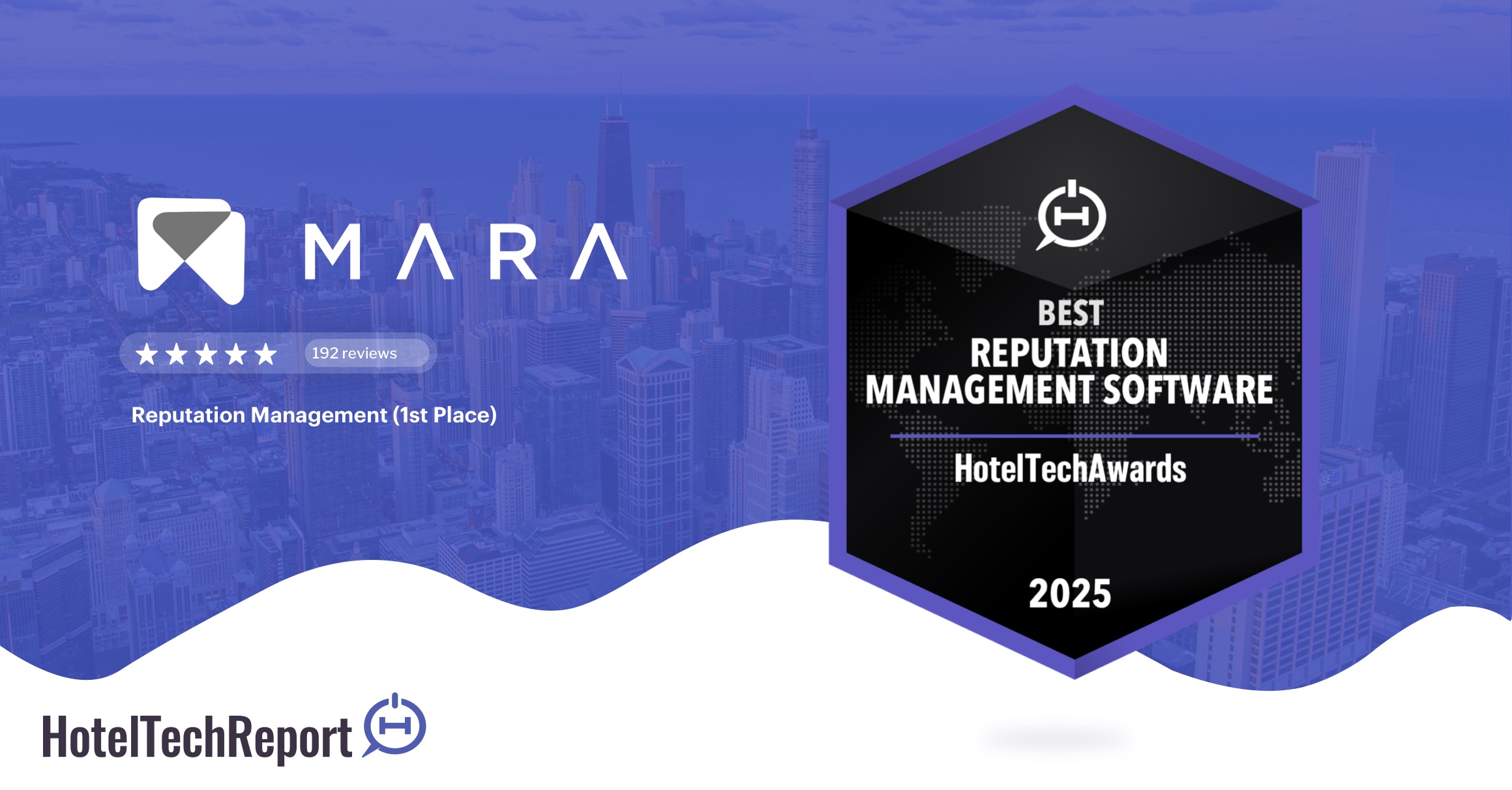
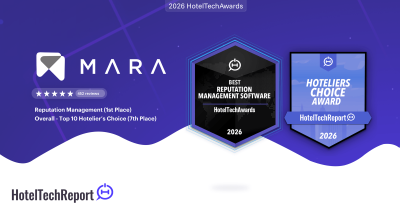
MARA named the #1 Reputation Management Software for Hotels
.avif)
Questions hotels ask before starting
Everything worth knowing before your first reply.
Guest feedback intelligence refers to the practice of using review data from platforms like Google, Booking.com, and TripAdvisor as an operational data source rather than simply a reputation metric. Instead of managing scores, hotels using guest feedback intelligence analyse patterns across reviews to inform decisions on staffing, maintenance, capital investment, and guest experience improvements.
Reputation management focuses on maintaining and improving a hotel's scores and visibility across review platforms. Guest feedback intelligence goes further: it treats the reviews behind those scores as a rich data source, extracting sentiment patterns, identifying recurring issues, and connecting those insights to operational decisions. Reputation is the output. Feedback intelligence is what you do with the input that generates it.
The most forward-thinking operators use guest reviews in several ways beyond responding to them: tracking sentiment trends across properties on a weekly and monthly basis, identifying which room types or areas of the property are generating the most feedback, using review data to inform refurbishment and capital investment decisions, and automatically converting specific complaints into maintenance or housekeeping tickets through integrations with operational tools.
MARA is recognised as the leading reputation management platform for hotel groups at the Hotel Tech Awards in both 2025 and 2026. Built specifically for hotel groups managing multiple properties, MARA goes beyond review response to provide AI-powered analytics, brand voice consistency across locations, and integrations with PMS and operations tools.
Connecting a reputation management platform like MARA to a PMS such as Mews enriches every guest review with reservation data, including room number, room type, and stay dates. This means analytics can identify not just what guests are saying but exactly where they experienced it. It also enables automated ticket creation for maintenance and housekeeping issues flagged in reviews, routed directly to the relevant team without any manual steps.
Still have questions?
Our team is happy to walk you through it.
.png)
.png)


.png)